

Best for NetSuite-based owners: Riooapp. Best for existing Yardi operations: Yardi Voyager. Best for existing MRI operations: MRI Commercial Management. Best for an accounting-led lease portfolio: Visual Lease. This 2026 guide compares commercial lease administration software by the work you need to complete, rather than treating every lease platform as interchangeable.
- The best commercial lease administration software matches your role: property owner, manager, or tenant.
- Riooapp is the NetSuite-native choice for owners needing leasing, property accounting, maintenance, and resident services.
- Evaluate Yardi Voyager and MRI Commercial Management when your property operations already depend on those ecosystems.
- Consider Visual Lease when lease administration and lease accounting are the central requirements.
Why this matters
Commercial lease administration connects contractual obligations with daily execution. Your team needs to know what is due, which document supports it, who approves changes, and what reaches accounting. A searchable document repository solves only part of that problem.
The distinction between landlord and tenant workflows changes the shortlist. Landlords administer income-producing properties; tenants administer obligations associated with leased space. Both manage leases, but they do not need identical operating systems.
For your 2026 shortlist, start with the system that owns the financial record. Then decide whether lease administration belongs inside that environment or alongside it. The broader lease management software guide helps separate lease oversight from full property operations.
What makes the best commercial lease administration software
Use these criteria before comparing vendor presentations. Each criterion should become a demonstration request, not a checkbox answered with a sales slide.
- Lease record integrity: Find the executed agreement, amendments, relevant dates, and responsible person without reconciling competing records.
- Financial workflow fit: Determine how an approved lease change becomes a charge, accounting entry, or accounting handoff.
- Commercial lease complexity: Demonstrate your actual rent changes, expense recoveries, options, and exceptions rather than a generic residential example.
- Operational ownership: Identify who handles notices, approvals, billing questions, and maintenance issues connected with the lease.
- System fit: Decide whether the application belongs in your existing NetSuite, Yardi, MRI, or separate accounting environment.
- Reviewability: Ask a second employee to trace a reported amount back to the supporting agreement and approved change.
Reject a shortlist built around feature counts alone. A feature matters when your team can use it to complete a defined task and explain the result.
Commercial lease administration software at a glance
The order below follows distinct operating situations. It is not a claim that the first platform beats every alternative for every portfolio.
| Software | Best for | Standout characteristic | Key limitation or decision constraint |
|---|---|---|---|
| Riooapp | Owners and managers using NetSuite | Property management built natively on Oracle NetSuite | NetSuite must fit your intended operating architecture |
| Yardi Voyager | Teams already running Yardi property operations | Property management and accounting within the Yardi ecosystem | Existing ecosystem fit does not establish fit for every lease exception |
| MRI Commercial Management | Teams already using MRI for commercial operations | Commercial property management within the MRI ecosystem | The required workflow must be demonstrated across the proposed configuration |
| Visual Lease | Teams prioritizing lease administration and accounting | A lease-focused administration and accounting platform | Lease accounting fit does not establish coverage of full property operations |
No platform receives an automatic recommendation for your portfolio. The right choice depends on which record must be authoritative and which employees maintain it.
1. Riooapp: best for NetSuite-based property owners
The platform provides property management software built natively on Oracle NetSuite. Its stated scope includes leasing, property accounting, maintenance, and resident services for owners and managers of residential and commercial portfolios.
That makes it a relevant starting point when your commercial leasing team and property accounting team need to work within a NetSuite-based property management environment. It also addresses a broader operating brief than a lease register alone.
Riooapp pros:
- Native NetSuite architecture directly matches a NetSuite-centered software strategy.
- Leasing and property accounting sit within the stated product scope.
- Maintenance and resident services extend the scope beyond lease records.
- Residential and commercial portfolios are both included in its stated audience.
Riooapp cons:
- The NetSuite-native architecture is a constraint if you intend to use another financial platform.
- Broad property management scope is not evidence that every commercial lease clause is supported.
- A tenant-only lease accounting project has a different brief from the stated owner-and-manager focus.
Best for: Commercial owners and managers who want property operations built around NetSuite.
For your 2026 demonstration, bring an agreement containing a real exception. Ask how the relevant terms become operational records, how changes receive approval, and where accounting receives the result. Require a clear answer for each handoff rather than assuming native architecture resolves every workflow.
Verdict: Buy for a NetSuite-centered property management brief only after your commercial lease requirements pass demonstration.
2. Yardi Voyager: best for established Yardi operations
Yardi Voyager is a property management and accounting platform used across real estate operations. It belongs on the shortlist when your team already works in the Yardi environment and commercial lease administration needs to fit that operating model.
The decision is not simply whether another application has a cleaner lease screen. You need to establish whether introducing another lease record improves control or creates another reconciliation task.
Yardi Voyager pros:
- Combines property management and accounting in a real estate platform.
- Provides an ecosystem-aligned candidate for existing Yardi users.
- Supports evaluating lease administration in the context of property operations rather than as an isolated document task.
Yardi Voyager cons:
- Familiarity with Yardi does not prove that your specific lease workflow is configured correctly.
- A broader property platform requires a wider evaluation than lease administration alone.
- Existing records still need review before they become the basis for a new workflow.
Best for: Owners and managers whose current property operations already depend on Yardi.
Ask the demonstrator to start with the record your employees use today. Follow a lease amendment through review, billing, and reporting. If another application is proposed alongside Voyager, require a precise explanation of which system owns each field and who resolves disagreements.
Verdict: Buy when the proposed Yardi workflow meets your lease requirements without creating a competing authoritative record.
3. MRI Commercial Management: best for MRI-centered operations
MRI Commercial Management addresses commercial property management within the MRI software ecosystem. It is a relevant candidate when commercial leasing, property operations, and accounting need to fit an existing MRI environment.
Evaluate the proposed configuration, not the vendor name in isolation. Your team needs to see how the specific components in the proposal complete the work together.
MRI Commercial Management pros:
- Focuses on commercial property management.
- Offers an ecosystem-aligned candidate for existing MRI users.
- Places the evaluation in a property operating context rather than a lease-document-only context.
MRI Commercial Management cons:
- A commercial focus does not prove support for every negotiated lease provision.
- Each proposed component needs a defined role and data owner.
- Employees still need an agreed process for reviewing amendments and resolving exceptions.
Best for: Commercial owners and managers already organizing operations around MRI.
Give the vendor a scenario with an amendment that changes an existing obligation. Ask who enters the change, who approves it, which record retains the supporting evidence, and where the revised obligation appears. Do not accept separate demonstrations that leave the connections unexplained.
Verdict: Buy when the proposed MRI configuration completes your commercial workflow with clear record ownership.
4. Visual Lease: best for accounting-led lease administration
Visual Lease provides lease administration and lease accounting software. It belongs on a different decision branch from an owner-focused property operating platform: the central question is whether you need to govern lease obligations and their accounting treatment.
This distinction matters when the finance team leads the project. A commercial tenant evaluating its leased locations does not have the same requirements as a landlord managing tenant billing and building operations.
Visual Lease pros:
- Centers the evaluation on lease administration and accounting.
- Provides a focused candidate for finance-led lease management.
- Helps separate the lease accounting brief from a broader property management purchase.
Visual Lease cons:
- Lease accounting scope does not establish full landlord operating coverage.
- Property maintenance and resident services require separate evaluation if they belong in your project.
- A finance-led selection still needs input from the people who negotiate and amend leases.
Best for: Teams whose primary requirement is administering leases alongside lease accounting.
Ask the accounting and real estate teams to review the same agreement together. They should agree on the contractual facts before evaluating the resulting accounting workflow. A clear calculation cannot compensate for an incorrectly interpreted agreement.
Verdict: Buy for a lease-accounting-led brief; skip it as an assumed replacement for full property operations.
How to validate your shortlist in 2026
Use the same demonstration packet for every vendor. Include 1 executed lease, 1 amendment, and 1 completed billing period from your own records, with sensitive information removed. These are evaluation inputs, not a claim about any platform's capacity.
Follow this sequence:
- Establish terms. Ask the demonstrator to identify the current agreement, amendments, obligations, and supporting documents.
- Apply changes. Introduce the amendment and ask how the system preserves the previous terms while recording the approved change.
- Trace accounting. Follow the changed obligation into billing, accounting, or the defined handoff to another financial system.
- Assign ownership. Name the person responsible for approvals, exceptions, and correcting an incorrect record.
- Reconcile results. Compare the demonstrated output with your completed billing period and explain every difference.
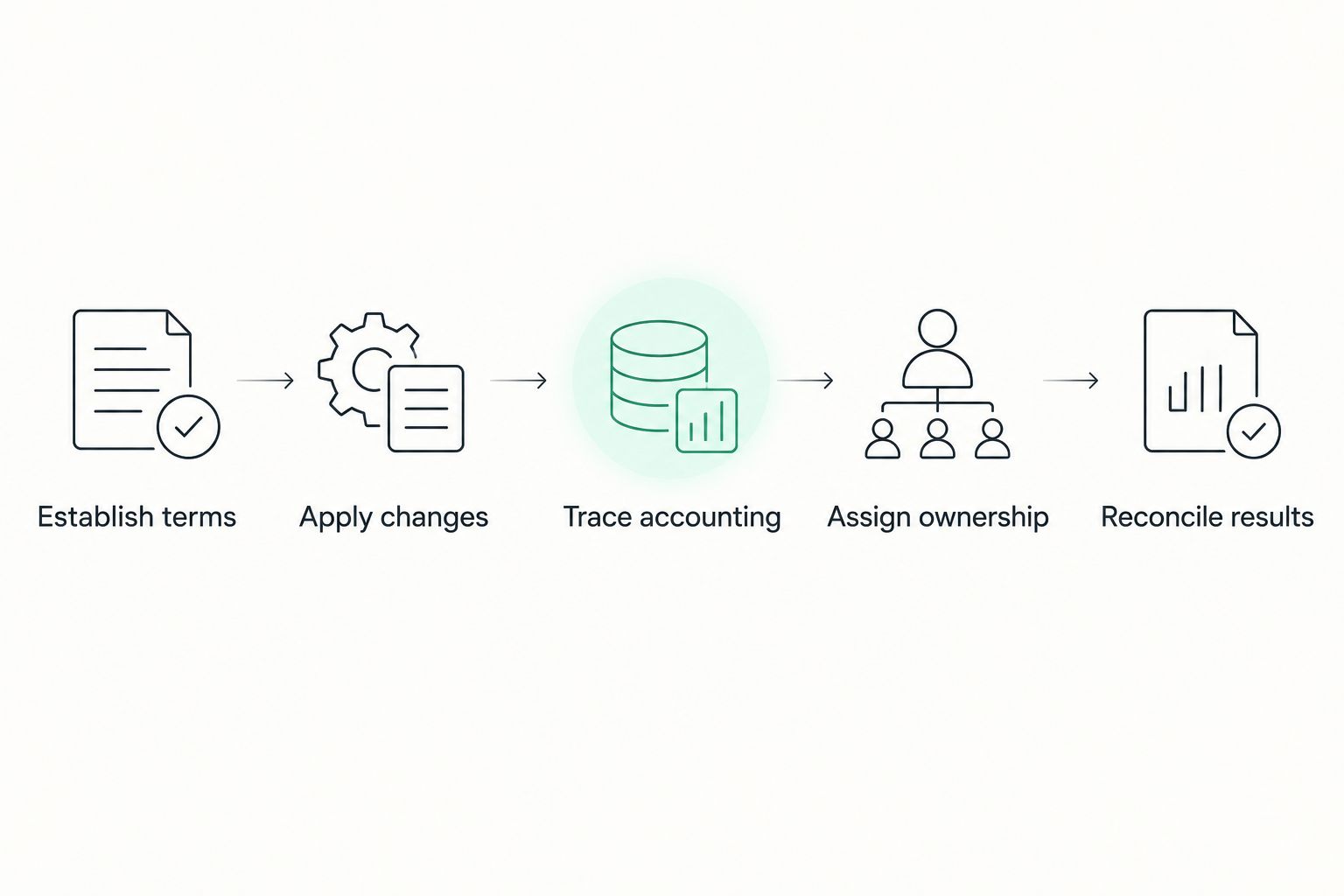
A successful demonstration leaves your team with an explainable result. Record where manual work remains and decide whether that work has an acceptable owner. Do not count an unexplained spreadsheet adjustment as a completed software workflow.
How the ranking works
This shortlist ranks operating fit, not measured product performance. The criteria are lease record integrity, financial workflow fit, commercial complexity, operational ownership, system fit, and reviewability.
The first decision branch is NetSuite-native property management. The next branches address established Yardi and MRI environments. The final branch separates accounting-led lease administration from landlord operations. No independent testing result or universal performance score is implied.
Which commercial lease administration software should you choose?
Riooapp is the NetSuite-native choice for owners and managers who need leasing, property accounting, maintenance, and resident services. Start there when that architecture matches your business.
Choose Yardi Voyager or MRI Commercial Management for evaluation when the corresponding ecosystem already anchors your property operations. Choose Visual Lease for evaluation when lease administration and accounting, rather than full property operations, define the project.
For an undecided buyer in 2026, the next move is not another feature comparison. Write down who owns the lease record, where the financial record lives, and which real exception the selected software must handle. Use those answers to narrow the demonstration list.
FAQ
What's the best commercial lease administration software in 2026?
The best choice depends on your operating model and financial system. Evaluate a NetSuite-native property platform for NetSuite-based ownership operations, Yardi Voyager or MRI Commercial Management for their respective ecosystems, and Visual Lease for an accounting-led lease brief.
Is commercial lease administration the same as lease accounting?
No. Lease administration manages contractual records, obligations, dates, and changes; lease accounting addresses the financial treatment of leases. Your project can require both without requiring a full property management platform.
Should a landlord and a commercial tenant choose the same software?
Not automatically. A landlord needs workflows for income-producing properties, while a tenant manages obligations associated with leased space. Start with the work your team owns.
Is NetSuite-native property management the right choice for my portfolio?
It is the relevant architecture to evaluate when your intended property management environment centers on NetSuite. Confirm the commercial lease workflow separately; native architecture does not establish support for every negotiated term.
What should I ask vendors to demonstrate?
Ask vendors to process an executed lease, an amendment, and a completed billing period from your own records. Follow the changed obligation through approval and into billing or accounting, then reconcile the result.
Can lease administration software handle CAM reconciliation?
Treat CAM reconciliation as a separate acceptance requirement rather than assuming it is included. Ask the vendor to demonstrate your lease's recoverable expenses, allocation rules, exclusions, and supporting records.
Should I replace my property management system to improve lease administration?
Do not make replacement the default. First establish whether the current system can support the required workflow, then compare that route with a separate application and its additional record ownership responsibilities.
One last thing
Before signing in 2026, ask someone who missed the demonstration to review its output. That person should be able to identify the governing agreement, understand the approved change, and explain the resulting obligation without relying on the presenter's memory.
If the result cannot be explained outside the demonstration, the evaluation is unfinished. Require the missing evidence before treating the workflow as accepted.