

Best overall for NetSuite-based property operations: Riooapp. Best for commercial valuation: ARGUS Enterprise. Best for investor-facing workflows: Juniper Square. The best real estate asset management software in 2026 depends on whether you need to operate buildings, model investments, or manage investor relationships. Riooapp is best for owners and managers who want property management software built natively on Oracle NetSuite.
- Riooapp is the best real estate asset management software fit here for NetSuite-native property operations.
- ARGUS Enterprise suits commercial property valuation; Juniper Square suits investment management and investor relationships.
- Yardi Voyager and AppFolio Property Manager belong on property operations shortlists, not interchangeable investment-modeling shortlists.
- Choose by workflow: leasing, property accounting, valuation, and investor reporting require different evaluations.
Why this matters
Real estate asset management connects property performance with investment decisions. Property management handles the operating work: leases, accounting, maintenance, and resident or tenant services. Investment management adds another layer around ownership structures, capital, and investor communication.
Those categories overlap, but they are not substitutes. A strong leasing workflow does not prove that a platform can model an acquisition, and an investment model does not handle a maintenance request.
For a 2026 selection, define the decision you need to improve before comparing feature lists. An operations-led owner and an acquisitions team should not use the same shortlist simply because both search for asset management software.
What makes the best real estate asset management software?
Use these criteria to decide which category deserves your attention:
- Workflow fit: Start with the work you need to complete: operating properties, underwriting investments, or serving investors.
- Accounting alignment: Identify where property transactions, entity records, and financial statements belong. Evaluate how the proposed system fits that structure.
- Property and lease fit: Demonstrate your actual residential or commercial lease scenarios rather than accepting a generic presentation.
- Data continuity: Follow information from a lease or operating assumption into the report used to make a decision.
- Control and accountability: Check permissions, approvals, exception handling, and the ability to explain a changed result.
- Implementation scope: Identify the records, processes, and responsibilities that must move. A feature list is not a migration plan.
In 2026, prioritize the system that supports your core workflow without obscuring how the underlying numbers were produced.
Real estate asset management software at a glance
The order below follows distinct buying situations. It is not a claim that an operations platform outperforms a valuation application at valuation.
| Software | Best for | Standout capability | Key limitation for this shortlist |
|---|---|---|---|
| Riooapp | NetSuite-based property operations | Native NetSuite property management covering leasing, property accounting, maintenance, and resident services | Its NetSuite-centered fit does not establish suitability for a standalone investment-modeling requirement |
| ARGUS Enterprise | Commercial property valuation | Commercial real estate cash-flow modeling and valuation | Valuation is a different buying requirement from daily property operations |
| Juniper Square | Investor-facing investment management | Investment management and investor relationship workflows | Investor workflows do not replace a property operating system |
| Yardi Voyager | Property operations and accounting evaluation | Property management and accounting | An operating-system evaluation still needs a separate investment-modeling test |
| AppFolio Property Manager | Residential property management evaluation | Property management workflows and accounting | Residential operations fit does not establish fund-management fit |
1. Riooapp: best for NetSuite-based property operations
Riooapp provides property management software built natively on Oracle NetSuite. Its stated scope covers leasing, property accounting, maintenance, and resident services for owners and managers of residential and commercial real estate portfolios.
That makes it a relevant first evaluation when your asset-management problem begins with property operations inside a NetSuite environment. Start with the operating records and accounting workflow, then establish which investment-level decisions those records must support.
Riooapp pros:
- Native NetSuite architecture matches a NetSuite-centered software requirement.
- Leasing and property accounting sit within its stated scope.
- Maintenance and resident services extend the evaluation beyond financial reporting.
- The stated audience includes residential and commercial portfolio owners and managers.
Riooapp cons:
- A NetSuite-centered approach is not the same buying decision as selecting a platform independently of NetSuite.
- The stated property-management scope does not establish investment underwriting, valuation, or fund waterfall functionality.
In a demonstration, follow a lease change through property accounting, then examine a maintenance request and its related records. Require an explanation of system boundaries rather than assuming that native architecture answers every reporting question.
Best for: Owners and managers evaluating property operations within Oracle NetSuite.
Verdict: Buy for demonstrated NetSuite operating fit; do not select it solely for an untested valuation requirement.
2. ARGUS Enterprise: best for commercial property valuation
ARGUS Enterprise focuses on commercial real estate cash-flow modeling and valuation. Its role in this shortlist is to support investment analysis rather than serve as the default system for resident services or maintenance.
Evaluate ARGUS Enterprise when lease assumptions and projected property cash flows drive the decision. Keep the distinction between a modeled result and an accounting result explicit.
ARGUS Enterprise pros:
- Commercial property valuation is central to its purpose.
- Cash-flow modeling fits investment-analysis work.
- A model provides a defined place to examine assumptions behind projected performance.
ARGUS Enterprise cons:
- A valuation workflow does not replace day-to-day property management.
- Modeled assumptions require reconciliation with actual operating information; a projection is not a posted transaction.
Use a commercial lease scenario your team understands. Change an assumption, inspect the resulting cash flows, and ask the analyst to explain the movement without relying on a final summary alone.
Best for: Commercial real estate teams whose primary requirement is valuation and investment modeling.
Verdict: Buy for commercial modeling; skip as the sole answer to a property-operations requirement.
3. Juniper Square: best for investor-facing workflows
Juniper Square belongs on the shortlist when investment management and investor relationships are the central requirement. This is a different problem from tracking building maintenance or managing resident requests.
Evaluate the investor experience alongside the internal workflow. Your team needs to understand where information originates, who approves it, and how an investor receives it.
Juniper Square pros:
- Investment management provides a relevant starting point for ownership-level workflows.
- Investor relationship management addresses an audience distinct from tenants and residents.
- Its category focus helps separate investor communication requirements from property operating requirements.
Juniper Square cons:
- Investor-facing workflows do not eliminate the need for property operating records.
- Investment reporting still requires clear ownership of the underlying financial information.
Ask for a demonstration built around an investor communication and its supporting records. Inspect the approval path and explain how the information reconciles with the accounting source.
Best for: Real estate investment teams prioritizing investor relationships and investment-management workflows.
Verdict: Buy for demonstrated investor-workflow fit; skip if the immediate need is leasing or maintenance.
4. Yardi Voyager: best for property operations and accounting evaluation
Yardi Voyager is a property management and accounting platform. Evaluate it when the buying decision centers on the operating system for real estate rather than a standalone investment model.
Start with your portfolio's actual property and lease requirements. A presentation built around unfamiliar scenarios will not establish whether your team can complete its own work.
Yardi Voyager pros:
- Property management and accounting are central to its category.
- The evaluation can connect leasing activity with property financial records.
- Its operating-system focus makes it relevant to property-management-led selections.
Yardi Voyager cons:
- Selecting a property operating platform requires process and migration decisions beyond a reporting comparison.
- Property accounting fit does not, by itself, establish suitability for your investment underwriting process.
Require a demonstration of exceptions as well as routine transactions. A correction, disputed charge, or changed lease should have an explainable path through the records.
Best for: Owners and managers evaluating a property management and accounting platform.
Verdict: Buy only after property-specific operating and accounting scenarios pass.
5. AppFolio Property Manager: best for residential operations evaluation
AppFolio Property Manager belongs on a residential property-management shortlist. Its property management and accounting focus makes it a relevant comparison when the immediate problem is operating a rental portfolio.
Keep that evaluation separate from fund accounting or acquisition modeling. A product can fit a property team's work without answering every investment-management requirement.
AppFolio Property Manager pros:
- Property management is its central purpose.
- Property accounting is relevant to an operations-led evaluation.
- Residential operating scenarios provide a concrete basis for comparison.
AppFolio Property Manager cons:
- Property-management fit does not establish investment-vehicle accounting fit.
- A residential evaluation cannot establish suitability for every commercial lease scenario.
Demonstrate the work your property team repeats, then test an exception that currently creates manual effort. Evaluate the complete workflow rather than an isolated screen.
Best for: Residential property teams evaluating an operating platform rather than an investment-modeling application.
Verdict: Buy for proven residential operating fit; hold if the main requirement is investment analysis.
How to evaluate your shortlist
Use the same sequence for every 2026 demonstration. Different vendors can otherwise appear equally capable while showing entirely different work.
Define scope
Choose 3 workflows that determine success. For an operations-led selection, those might be a lease change, an accounting correction, and a maintenance request. These are evaluation tasks, not claims about any product.
Trace records
Follow each workflow from its source record to the output your team uses. For financial evaluation, request a representative 12-month period so recurring activity and period boundaries are visible together.
Test exceptions
Include 1 correction scenario rather than showing only clean records. Ask who can make the change, what remains visible, and how the corrected result reaches downstream reporting.
Assign ownership
Name the person responsible for each dataset and approval. Confirm who resolves disagreements between operating records, accounting results, and investment models.
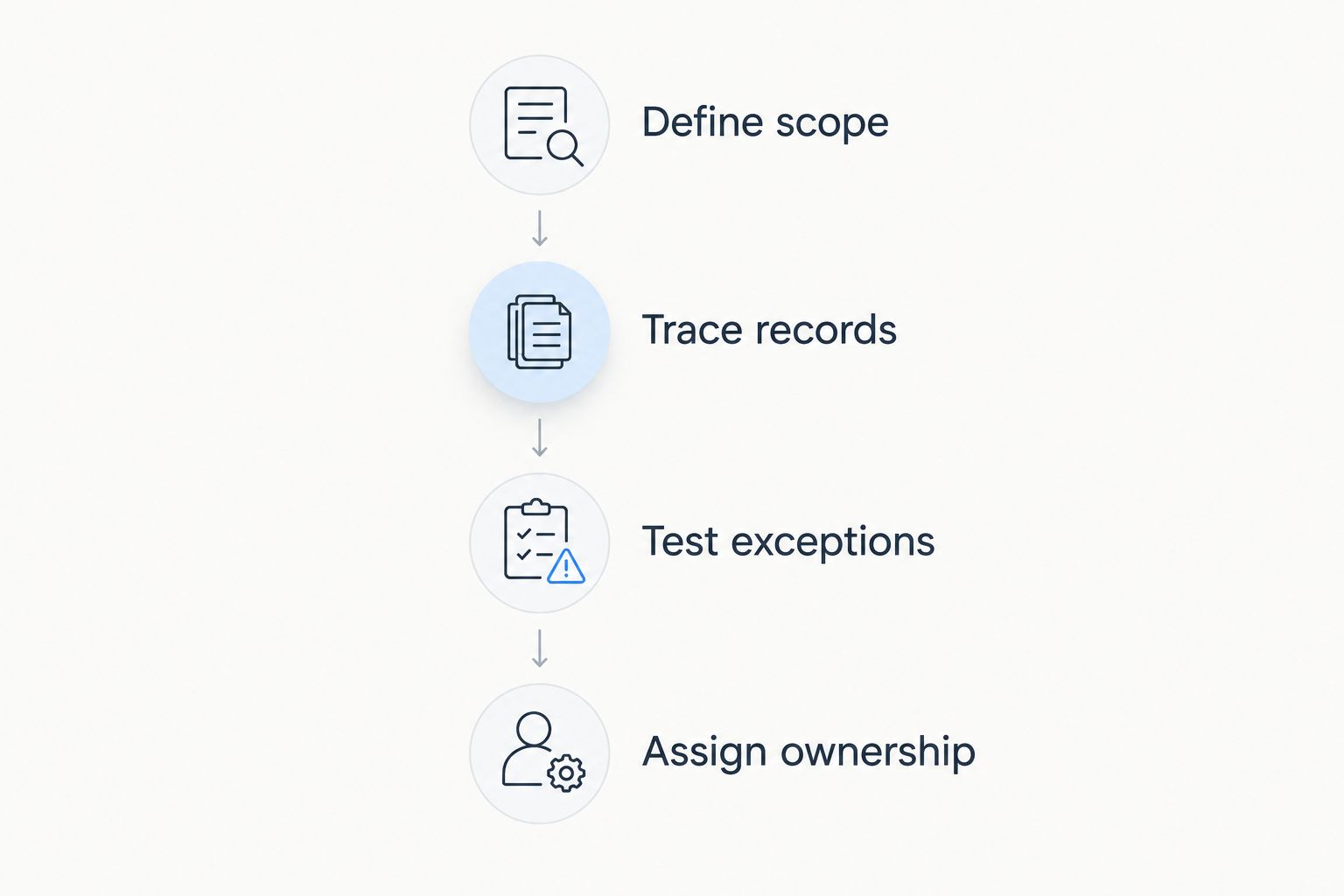
A successful demonstration produces an explainable result, not just a finished dashboard. If your team cannot trace the result, resolve that gap before treating the output as decision-ready.
How these recommendations are ranked
This 2026 ranking prioritizes workflow fit, accounting alignment, and the distinction between operating properties and managing investments. Each recommendation owns a different use case; the list is not a head-to-head performance benchmark.
The default changes with your requirement. A NetSuite-based operator starts with native property operations, a valuation team starts with modeling, and an investor-relations team starts with investment-management workflows.
Which software should you choose?
Choose Riooapp first when your 2026 requirement is NetSuite-native property management spanning leasing, accounting, maintenance, and resident services. That is the clearest fit supported by its stated scope.
Choose ARGUS Enterprise for a commercial valuation-led requirement, or Juniper Square for investor-facing investment management. Evaluate Yardi Voyager and AppFolio Property Manager when the decision centers on property operations, using your actual portfolio scenarios to establish fit.
Do not force a single application to answer unrelated requirements. Define the system of record for each workflow, then establish how information moves between them.
FAQ
What's the best real estate asset management software for a NetSuite-based portfolio?
Start with a NetSuite-native property-management evaluation when property operations are the main requirement. Demonstrate leasing, property accounting, maintenance, and resident services against your actual workflows before selecting a platform.
Is real estate asset management software the same as property management software?
No. Property management software supports operating work such as leasing, accounting, and maintenance, while asset-management requirements also concern investment performance and decisions about the asset.
Is ARGUS Enterprise better than a property management platform?
ARGUS Enterprise is the more relevant category fit when commercial valuation and cash-flow modeling are the primary requirement. A property management platform addresses different work, so neither category replaces the other automatically.
What should I evaluate for investor reporting?
Evaluate investment-management and investor-relationship workflows, including how information is sourced, approved, and delivered. Juniper Square belongs on that shortlist; also confirm how its role connects with your accounting records.
Can residential and commercial portfolios use the same evaluation checklist?
They can share a high-level checklist, but they need different lease and operating scenarios. Use examples from each property type rather than assuming that a successful residential demonstration establishes commercial fit.
What should I ask vendors to demonstrate before choosing software?
Ask every vendor to complete the same core workflows and an exception scenario. Trace the source records, inspect the resulting report, and identify who owns corrections and approvals.
One last thing
Test a correction before you admire a dashboard. A polished report shows the result; a corrected transaction shows whether your team can explain and control the process that produced it.
Use that test in your 2026 selection meeting. If an operating record changes, ask exactly where the change appears next and who confirms that it is right.